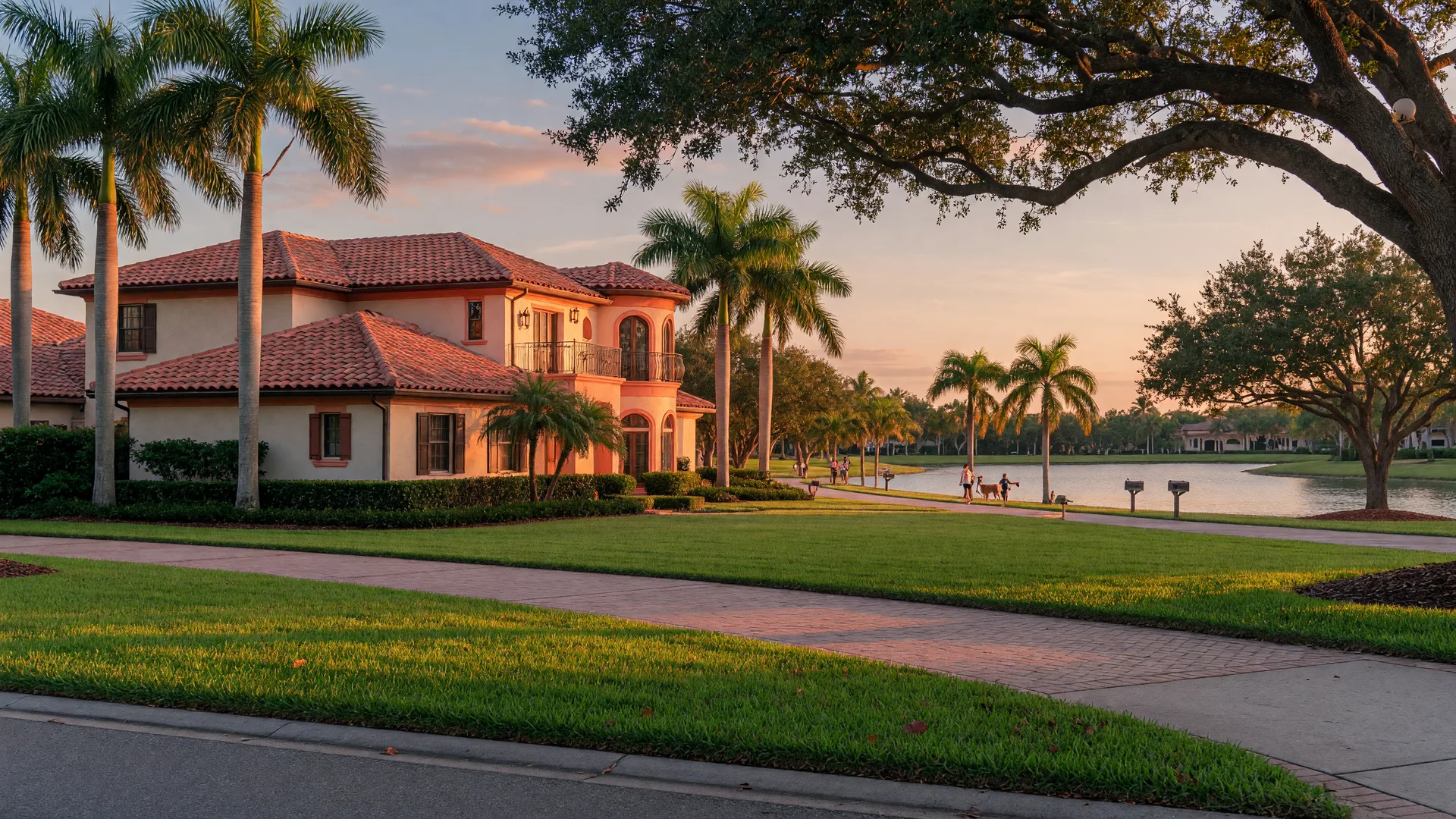
Trinity is HOA country, and selling a home here in 2026 is really three jobs in one: get the association paperwork right, make an honest call on condition, and price for a market where the average Trinity-area home now sells about 5% below asking and takes close to two months to find a buyer. Homes that are priced well and show ready, by contrast, are going under contract in about four weeks. This guide walks through all three parts with real 34655 data, so you can list with confidence instead of guesswork.
What the Trinity Market Actually Looks Like for Sellers Right Now
The first number a Trinity seller needs is the real sold price in their own part of town, and the second is how long homes are actually taking. In the 34655 ZIP, which covers the heart of Trinity, Redfin's data through mid-2026 shows a median sale price around $390,000, down roughly 3% from a year earlier, with more than 200 homes selling in a recent three-month stretch. Citywide reads skew higher, closer to the $500,000 range, because they blend in the golf course estates of Fox Hollow, the gated stock of Trinity Preserve, and the newer homes along the community's western edge.
Every tracker agrees on the direction: this is a market where the typical home sells slightly below its list price. Redfin's 34655 trends put the sale-to-list ratio near 97%, and its citywide read shows the average Trinity home selling about 5% under asking and taking roughly 54 to 62 days to go pending. Do not read that as bad news. Read it as information. A listing priced in line with its direct comparables is still going under contract in about four weeks, while an overpriced listing stretches past two months, gets its price cut, and then negotiates from a weaker position. Whether a Trinity home sells near list in a month or 5% under list in two depends far more on the price it first hits the market with than on anything else.
These figures move month to month and vary by source, so treat them as a map of the market rather than a price list. The pattern holds regardless: in Trinity in 2026, the seller who prices like an advisor wins, and the seller who prices like a gambler waits.
Trinity Is HOA Country: What Sellers Must Prepare
Trinity was built as a collection of master-planned communities, which means nearly every home here answers to an association. Starkey Ranch, Trinity Preserve, Fox Hollow, and Heritage Springs each carry their own structure, many of them with a master association on top and a neighborhood association underneath. Membership is mandatory, and the paperwork matters more at the closing table than most sellers expect. Here is what we line up on every Trinity listing:
- Order the estoppel the week you list. Before closing, the title company requests an estoppel, a statement from the association showing every assessment owed, any pending fees, and whether the account is current. In a market where buyers already have choices, a surprise HOA payoff or a slow response can push a closing date. We order it early so the number is known before we accept an offer, not discovered after.
- Know the dues, and say them out loud. The monthly association fee is part of your buyer's payment, so it is part of your pricing conversation. Starkey Ranch homes pay a modest master association fee on top of neighborhood dues that commonly run from about $167 a month up into four figures quarterly in the larger amenity neighborhoods, with the 55+ Esplanade at Starkey Ranch in the high $100s to low $400s monthly. Trinity Preserve dues range widely, from roughly $67 a month on smaller homes to more than $1,000 on estate properties, depending on lot and amenities. Fox Hollow's sub-associations are known for lighter fees with no CDD attached, while Heritage Springs runs from about $181 to $340 a month with a modest annual CDD. The exact number depends on the sub-association and the home, so confirm it for your specific property before you list.
- Resolve violations before you list, not after. Associations enforce architectural control, landscaping, parking, and rental rules, and they can fine and lien. A pre-listing walk of your own curb line, paint, trim, mailbox, and garage door catches most issues in an afternoon, and an HOA with nothing to chase never slows your closing.
- Review the docs so you can answer buyer questions. CC&Rs, bylaws, and reserve funds all come up in serious offers. A seller who can hand a buyer's agent a clean association package signals a smooth transaction, and in Trinity that is a competitive advantage.
None of this should scare a Trinity seller. It should simply be part of the prep, the way a roof inspection or a pre-listing cleaning is. All of these associations were turned over to homeowners years ago, they are run by neighbors like you, and the paperwork is a routine part of every sale here. You just want it handled on your timetable, not the buyer's.
Move-In-Ready vs. Updates: What Trinity Buyers Actually Pay For
Because a Trinity buyer is almost always comparing your home against the newer stock a street or two over in Starkey Ranch or Trinity Preserve, condition is the single biggest variable we see between a four-week sale and a three-month one. The good news is that buyers here pay for what they can see and verify, and they are realistic about a well-cared-for home that is not brand new.
- Fresh, neutral, and clean sells first. A home with fresh paint, clean current flooring, and a kitchen and baths that do not demand a reno belongs in a different price conversation than the same floor plan needing all of that. Buyers will finance a move-in-ready price; they will discount a to-do list.
- Systems matter as much as cosmetics. Roof age, impact windows, HVAC, and the water heater are the first things a buyer's inspection and their insurance quote check. A newer roof and impact glass answer the two questions every Tampa Bay buyer asks before they even schedule a tour.
- Do not over-improve for the neighborhood. In a market with median prices in the $390,000 to $500,000-plus range, the goal is to be the best-conditioned home at your price point, not the most remodeled home in an overpriced one. Prioritize the updates buyers can see and verify, and get our honest opinion on where your dollars actually pay back at the closing table.
- Consider a pre-listing inspection. Finding a roof or AC issue on your schedule, with time to address it or price for it, is far stronger than finding it inside a buyer's inspection period. Sellers who know their own home's condition negotiate with confidence, and buyers can feel that.
The lifestyle helps you here. A-rated Pasco schools, the Starkey Wilderness Park right next door, Starkey Ranch District Park's fields and splash pads, golf at Fox Hollow, and the everyday convenience of Trinity Commons shopping and dining are exactly why buyers keep comparing Trinity against the rest of west Pasco. Your job as a seller is to make sure condition is not the reason they choose the newer house instead.
Pricing Your Trinity Home to Sell in 2026
Pricing is where Trinity sales are really won and lost this year. With the average home closing about 5% below list and the sale-to-list ratio near 97% in the 34655 data, the asking price is no longer a wish, it is a strategy. Here is how we build it:
- Price from closed sales in your own sub-community. A Fox Hollow golf-course home and a Starkey Ranch family home are different markets even though they sit minutes apart. We pull the last several months of closed sales in your specific neighborhood, adjust for square footage, lot, lake or conservation view, upgrades, and condition, and price against the homes buyers will actually tour.
- Win the first two weeks. A fresh listing gets its best exposure immediately, and the algorithm and the showings reward that window. An overpriced first impression is a wasted one, and the days-on-market clock is public. Homes that drop price later wear that story through the whole negotiation.
- Price with the buyer's monthly payment in view. In a rate-conscious market, HOA dues, CDD where it exists, insurance, and taxes are all part of the number a buyer can actually carry. A home priced a touch under its most direct comparables, with room in the buyer's budget for association costs, attracts the widest pool of showings, and showings are the raw material offers are made of.
- Be ready to negotiate terms, not just price. Closing-cost credits and temporary rate buydowns are normal and expected in 2026. A fair price with a well-structured concession can beat a stubborn higher price with nothing behind it, and serious Trinity buyers are comparing both.
Pricing is also where we earn our keep as advisors. We do not tell sellers what they want to hear, we tell them what the data and the buyers say, and then we market the home accordingly. That honesty is why sellers who work with us close, and close happy.
A word on who is writing this. We are Paul and Denise Virgadamo, a husband-and-wife team at Dalton Wade Real Estate Group with more than 45 years of Tampa Bay roots and over 1,000 homes sold across Pasco, Pinellas, and Hillsborough Counties. Trinity is home turf for us; we work its neighborhoods and its homeowners' associations every single week, and everything above is the same honest, data-backed picture we give sellers before a sign ever goes in the yard.
The Trinity Seller's Checklist
If you are getting ready to list, here is the checklist we run with every Trinity seller before day one:
- Pull your association documents and order the estoppel early, so the HOA never slows your closing.
- Walk the curb line like a buyer's agent: paint, trim, landscaping, mailbox, garage door. Resolve obvious violations before the signs go up.
- Get the mechanical story straight: roof age and condition, impact windows, HVAC age, any inspection reports you already have.
- Decide on high-payoff updates with an honest return-on-investment conversation, not a wish list.
- Price against closed sales in your specific neighborhood, with the buyer's monthly cost and the first-two-weeks window in mind.
- Prepare for terms: think through what concessions you can offer a qualified buyer before the offers arrive, not after.
Tampa Bay as a region sits in a balanced market in 2026, but Trinity is its own story: a master-planned, HOA-governed, family-first community where schools, parks, and golf drive steady buyer demand. The sellers who do best here are the ones who treat it as the organized, competitive market it is. Prepare the paperwork, present the condition honestly, price with data, and Trinity still rewards you. For a full look at the neighborhoods, parks, dining, and daily life that make this community so desirable, start with our Trinity community guide.
The Bottom Line from Team Virgadamo
Here is the summary we would give our own family: in Trinity in 2026, expect to sell slightly below a realistic asking price, prepare the association paperwork before you list, present move-in-ready condition or price the to-do list honestly, and let the first two weeks on market do the heavy lifting. Do those four things, and your Trinity closing can be smooth, on time, and at a number you can feel good about.
Who you hire truly matters. We have lived, bought, and sold in this market for over 45 years, closed more than 1,000 homes, and we know the difference between a Trinity listing priced like a strategy and one priced like a hope. Start with our Trinity community guide, then let's build your plan together. We Live, Love & Sell Tampa Bay!
Ready to find out what your Trinity home is worth in 2026?
Let's pull the closed sales in your neighborhood, review your association paperwork, and build a pricing strategy that wins the first two weeks. Schedule a free, no-obligation consultation with Paul and Denise Virgadamo.
Explore our communities: