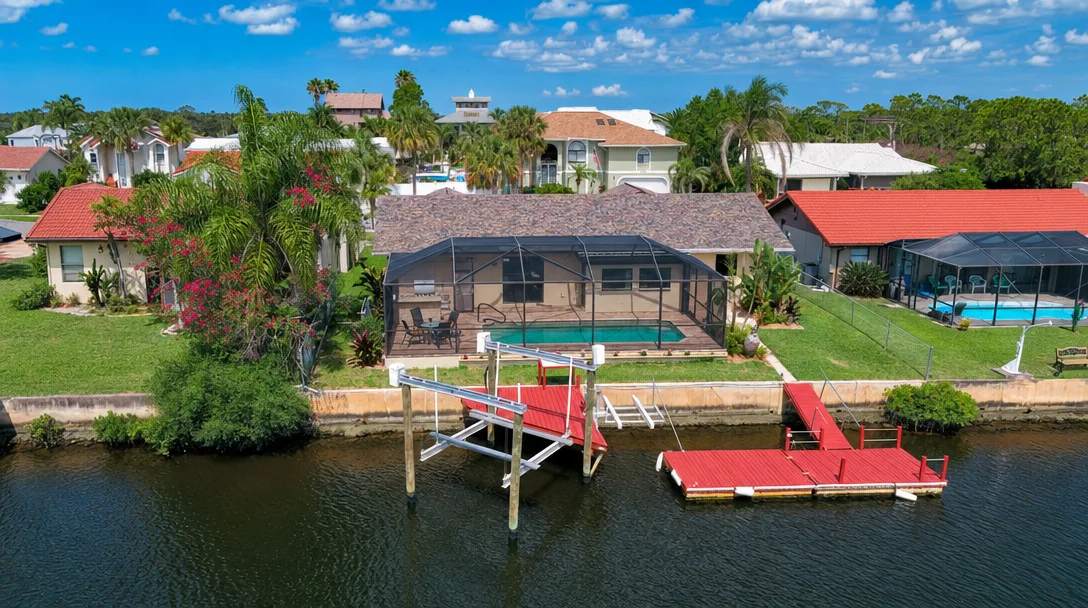
In Port Richey, a waterfront home sells on the strength of its paperwork just as much as its view. Buyers here are not only comparing your price against other canal listings, they are comparing your survey, your dock and seawall permits, your repair records, and your flood insurance. A home that arrives at the market with that file in order protects its value. A home that arrives without it gives serious buyers a reason to negotiate hard or walk. Here is what the 2026 Port Richey market actually looks like for sellers, and the exact paperwork stack that separates a smooth waterfront closing from a stalled one.
Paul and Denise Virgadamo here, the husband-and-wife team behind Team Virgadamo at Dalton Wade Real Estate Group. Port Richey is our home turf, and we sell canal homes here every season, drawing on more than 45 years of Tampa Bay roots and over 1,000 homes sold across Pasco, Pinellas, and Hillsborough Counties. This is the honest, data-backed picture we give waterfront sellers before a sign ever goes in the yard.
What the Port Richey Market Looks Like for Sellers Right Now
The first number a Port Richey seller needs is the real sold price in their own ZIP, and the second is how long homes actually take. Citywide, the median sale price sits around $255,000, and the 34668 ZIP, which covers most of Port Richey, has held near $240,000 over the past year with prices roughly flat. Most homes in the city trade between about $200,000 and $350,000, with waterfront and premium properties reaching higher. That makes Port Richey one of the most affordable waterfront-adjacent markets in west Pasco, and it is exactly why buyers keep searching here.
The pace is the part that surprises sellers. Citywide data through mid-2026 shows the average Port Richey home taking around 71 days to sell, up from about 63 days a year earlier, and most homes are closing roughly 4% to 8% below their list price, with Pasco County's overall sale-to-list ratio near 95%. These figures move month to month and vary by source, so treat them as a map of the market rather than a price list. The pattern holds regardless: in Port Richey in 2026, the seller who prices like an advisor wins, and the seller who prices like a gambler waits.
Waterfront changes the math in one important way. Deep-water canal homes with a private dock, a boat lift, and direct Gulf access draw a smaller but far more serious pool of buyers: boaters, anglers, retirees, and out-of-state buyers who searched for "Gulf access" before they ever searched for Port Richey. That pool is willing to pay a real premium for the water story, but it is also the most paperwork-aware group of buyers in the entire market. They know exactly what to ask for, and they will ask for it before they write an offer.
The Waterfront Paperwork Stack That Protects Your Price
Here is the file we assemble with every Port Richey waterfront seller, and here is why each piece matters at the closing table:
- The survey. This is the document that proves your boundary lines, your canal frontage, where the dock sits, and any easements across the lot. A buyer's title company and lender will both want it, and a buyer's agent will use it to verify the dock and seawall are where the listing says they are. If your survey is old or the dock was extended since it was drawn, order a new one before you list.
- Dock and seawall permits. Pasco County requires a permit for the construction, enlargement, alteration, repair, or demolition of any dock or seawall, and the permit package calls for engineered plans that are signed and sealed, contractor license information, and, for projects over $2,500, a recorded Notice of Commencement. Inside the City of Port Richey, piers, docks, and other marine structures are governed by the city's own code. Pull the permit history for your dock and seawall before you list, because a buyer's agent can pull it too, and a documented, permitted history is a genuine selling point.
- Repair records. Seawall cracks and cap replacements, dock board replacements, boat lift maintenance, any pump or electrical work at the dock: gather every invoice and note you have. A seawall has a limited useful life, roughly 25 to 50 years for a concrete cap-and-panel wall, and many Port Richey canal homes were built from the 1980s through the 2000s, so the age of your seawall is a real question buyers will ask. Records that show it has been maintained answer that question in your favor.
- Engineer letters. Pasco County can require an engineering certification for dock and seawall projection and location compliance, and engineered plans are required for permitted work. For the seller, the more valuable document is a pre-listing seawall inspection from a licensed engineer: a written opinion on the condition of the structure, any needed repairs, and an honest estimate of remaining life. It is the single best investment a waterfront seller makes, because it turns the scariest unknown in the transaction into a known, documented fact.
None of this is busywork. In a market where the average home takes more than two months to sell, a waterfront listing with this file assembled on day one stands apart from the listings that scramble for paperwork after an offer arrives. Buyers feel the difference, and so does their lender, their title company, and their inspector.
Honest Disclosure of Water-Structure Condition
Florida's flood disclosure law, which took effect on October 1, 2024, requires a seller to provide a written flood disclosure to the purchaser at or before contract execution. That form covers flood damage the seller knows about, flood insurance claims, and any federal disaster assistance received for flood damage. It is a legal requirement, not a courtesy, and a Port Richey waterfront seller should complete it accurately and early, before the offers arrive, not after.
What surprises many sellers is that the flood disclosure form does not cover seawall condition. Seawall and dock condition falls under the general disclosure duty and the Seller's Property Disclosure form, and Florida case law is clear that sellers must disclose known facts that materially affect the value of the property. A known seawall crack, a dock with rot, a history of flooding in the yard: these belong in the file. Here is the honest advisor's case for full disclosure on a waterfront home:
- Waterfront buyers will find out anyway. The survey shows the dock location, the county shows the permits, the inspection shows the seawall, and the flood disclosure shows the claims. There is no version of a Port Richey waterfront sale where the water story stays hidden.
- Disclosure protects your price. A buyer who discovers a disclosed issue has already priced it into their offer. A buyer who discovers a hidden issue walks, or renegotiates from a position of distrust, and a failed waterfront contract costs you weeks of market time.
- Disclosure protects you after closing. Florida's disclosure duties do not end at the closing table. A seller who knew about a seawall failure and said nothing has exposure after the deed is recorded. A seller who disclosed it, with an engineer letter in the file, closes the chapter cleanly.
- Honesty is the brand. The buyers who shop Port Richey waterfront are comparing you against other waterfront sellers, and a seller who hands over a complete, honest file reads as someone they can trust through a complex transaction. That trust is worth real money at the negotiating table.
We never advise a seller to hide a water-structure issue, and we never advise a seller to guess about one either. If you do not know the condition of your seawall, find out before you list. The inspection is a few hundred dollars. The surprise is not.
Flood Zones and Insurance: Know the Numbers Before You List
Port Richey is a waterfront town, and its flood map is part of its identity. Along the Pithlachascotee River corridor and the canal neighborhoods, homes sit in Zone AE, the coastal floodplain, with Zone VE along the most exposed open water and Zone X on higher interior ground. Base flood elevations in the coastal AE zones commonly run around 10 to 11 feet, and structures in the special flood hazard area face roughly a 26% chance of flooding over a 30-year mortgage. That is the honest context every waterfront buyer is working with, and it is why the insurance number matters so much.
- Know the real premium, and say it out loud. Pasco County flood policies in Zone AE average about $1,665 a year, and Zone VE policies average about $2,305, while the NFIP average across Florida is closer to $938. Port Richey flood policies typically run from about $500 to $2,500 a year depending on elevation, zone, and coverage. Under FEMA's Risk Rating 2.0, premiums are calculated parcel by parcel, so the actual number at your address is the only number that matters.
- Find your elevation certificate. This is the document that sets the premium: it records the height of the lowest floor relative to the base flood elevation. A home built or raised to the 10 to 11 foot standard in the coastal AE zones is in a completely different insurance position than one that is not. If you have an elevation certificate, hand it over on day one. If you do not, consider ordering one before you list.
- Pull your flood policy declarations. Buyers assume the worst about flood insurance until they see a real number. A current declarations page showing a reasonable premium is one of the most persuasive documents a Port Richey waterfront seller can put in front of a buyer.
- Complete the flood disclosure form correctly. Flood damage history, insurance claims, federal assistance: answer truthfully, and let your agent help you frame the story. A clean history is a selling point, and a disclosed history with documentation is a manageable one.
The sellers who win in this market treat flood insurance as a marketing asset, not a liability. The buyer who sees a $1,400 annual premium on an elevated, well-maintained canal home stops worrying about insurance and starts worrying about whether the dock will fit their boat. That is exactly where you want them.
Pricing and Marketing a Port Richey Waterfront Home
Waterfront pricing does not follow the neighborhood median, and it should not. A deep-water canal home with a private dock and boat lift trades against other deep-water canal sales, not against the $255,000 citywide median, and the spread between waterfront listings is driven by four things: canal depth and Gulf access, dock condition, seawall condition, and elevation. We build every waterfront pricing strategy from closed sales that share those characteristics, and we are honest when a seller's expectations do not match the data.
- Price with the buyer's total monthly cost in view. Flood insurance, flood-zone mortgage requirements, dock maintenance, and boat lift upkeep are all part of the number a waterfront buyer can actually carry. A home priced a touch under its most direct comparables, with the insurance story already answered, attracts the widest pool of serious showings.
- Win the first two weeks, and plan for a longer runway. The waterfront buyer pool is smaller, so the first weeks of exposure matter even more, and the market's 71-day average means patience is part of the plan. An overpriced waterfront listing sits longest of all, because there are simply fewer buyers to prove it wrong.
- Market the water, not just the house. Drone footage from the canal, photos at high tide, a depth reading at the dock, the bridgeless run to the Gulf: this is what separates a waterfront listing from a house with a view. The lifestyle sells itself once buyers see Werner-Boyce Salt Springs State Park, the docks and tiki bars along the Pithlachascotee, and the boat ramps that make Gulf access real.
- Be ready to negotiate terms, not just price. Closing-cost credits and temporary rate buydowns are normal in 2026, and on waterfront, a seller who has already offered a seawall inspection report or a current flood quote has removed the two objections that kill deals. Serious buyers are comparing both price and paperwork.
For a full look at the neighborhoods, parks, dining, and daily life that make Port Richey so desirable, start with our Port Richey community guide.
The Port Richey Waterfront Seller's Checklist
If you are getting ready to list a canal or riverfront home, here is the checklist we run with every Port Richey waterfront seller before day one:
- Order your survey and confirm the dock and seawall sit exactly where the paper says they do.
- Pull every dock and seawall permit from Pasco County, or from the City of Port Richey if your property is inside city limits.
- Get a pre-listing seawall inspection and an engineer letter on condition, before a buyer's inspector finds anything.
- Gather repair records for the seawall, dock, boat lift, and any dock electrical work.
- Locate your elevation certificate and your current flood policy declarations.
- Complete the flood disclosure form accurately, before you accept offers, and hand it over with the rest of the file.
- Price against closed waterfront sales in your canal or river corridor, with the buyer's total monthly cost in view.
- Prepare for terms: think through what concessions you can offer a qualified buyer before the offers arrive, not after.
Tampa Bay as a region sits in a balanced market in 2026, but Port Richey waterfront is its own story: an affordable Gulf-access lifestyle where the buyers are serious and the paperwork is the competitive edge. The sellers who do best here are the ones who treat the water like the asset it is, document every part of it, disclose it honestly, and let the file do the negotiating.
The Bottom Line from Team Virgadamo
Here is the summary we would give our own family: in Port Richey in 2026, expect a longer sale and a price slightly below a realistic asking price, assemble the full waterfront file before you list, disclose the water-structure condition honestly, and let the flood insurance and seawall story work for you instead of against you. Do those things, and your Port Richey waterfront closing can be smooth, on time, and at a number you can feel good about.
Who you hire truly matters. We have lived, bought, and sold in this market for over 45 years, closed more than 1,000 homes, and we know the difference between a waterfront listing priced like a strategy and one priced like a hope. Start with our Port Richey community guide, then let's build your plan together. We Live, Love & Sell Tampa Bay!
Ready to sell your Port Richey waterfront home?
Let's pull the closed waterfront sales in your canal, review your dock and seawall paperwork, and build a pricing and disclosure strategy that protects your value. Schedule a free, no-obligation consultation with Paul and Denise Virgadamo.
Explore our communities: