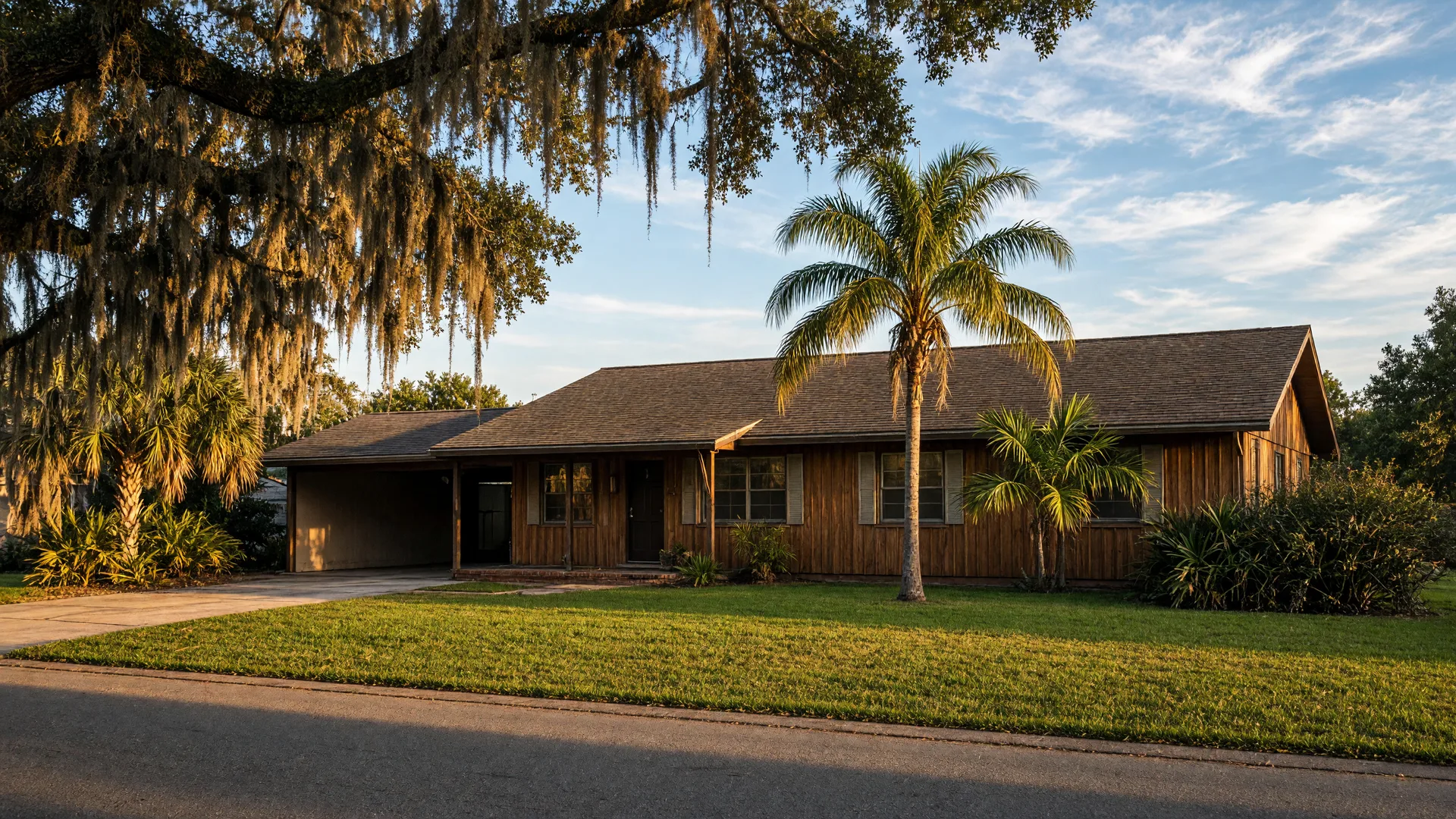
What does a home inspection actually find in New Port Richey? In most cases, more than the asking price suggests, because the city's housing stock is genuinely old. The typical home in the 34652 ZIP was built in the early to mid-1970s, the historic city core's median home dates to 1960, and even the newer 34653 side of town mostly dates to the late 1980s. That means the inspection, not the list price, is where the real conversation happens, and it is also where 2026 buyers have the most leverage.
Why New Port Richey's Housing Stock Puts Inspection Front and Center
The age of the housing stock is not a knock on the city, it is the reason so many buyers can afford it. New Port Richey offers some of the most affordable Gulf Coast living in west Pasco precisely because most of its homes were built before the 2000s building boom. In the 34652 ZIP, roughly 46% of homes were built in the 1970s alone, another 17% in the 1980s, and about 17% in the 1960s, with essentially no new construction since 2020. The 34653 ZIP skews newer, with a median build year around the late 1980s, and the historic city core around Sims Park includes homes built as far back as 1913.
We have walked through thousands of these homes over the years, and the pattern is consistent: the bones are often great, and the systems are what need scrutiny. Between our 45-plus years of Tampa Bay roots and more than 1,000 homes sold across Pasco, Pinellas, and Hillsborough Counties, we have watched the same inspection findings repeat in every New Port Richey neighborhood, from the downtown bungalows to the Gulf Harbors canals. Almost all of them are negotiable, and knowing which ones matter is the difference between a smart buy and a surprise budget.
The Four Findings That Show Up Again and Again
Florida inspection reports have a familiar shape, and New Port Richey's older homes hit every one of these categories. Here is what to expect, and what each finding actually means for your offer.
Plumbing is the finding buyers least expect and the one that costs the most to fix. Homes built before roughly 1975, which is most of 34652, very likely have cast iron drain lines. In Florida's moist, sandy soil those pipes corrode and scale from the inside out, sometimes collapsing entirely, and because they run under the slab, a sewer scope is the only way to see them. Galvanized steel supply lines, also common in this era, corrode internally and slowly strangle water pressure. If the home was built between about 1978 and 1995, ask about polybutylene supply lines, the gray plastic piping that becomes brittle and fails, and that can make a home genuinely hard to insure. None of these are automatic deal-breakers, but they are all price tags, and they belong in your negotiation.
The roof is the most common big-ticket finding in Florida, period. Asphalt shingle roofs last 15 to 20 years in this climate, and most insurers now require replacement, or charge steep premiums, for roofs past 15 years. Inspectors look for granule loss, curled or brittle shingles, failed flashing, and soft decking. On a 1970s ranch in New Port Richey, a roof that is 12 years old is a planning item; a roof that is 20 years old is a negotiation item. Ask for the roof age and any documentation before you offer, and let the inspection confirm it.
Florida air conditioners run ten to twelve months a year, so they age fast. Ten to 15 years is a full lifespan here, not the 15 to 20 you hear about up north. The most common AC findings are clogged condensate drain lines, which are a top cause of water damage, corroded coils on coastal units, and systems that cannot hold indoor humidity below about 60%. On the Gulf side of New Port Richey, salt air does a number on outdoor units, so check the install date and the coil condition before you fall in love with the curb appeal.
Moisture is the long-term threat in every Florida home, and it is the finding that scares buyers the most. The usual entry points are failed flashing and ridge caps, poor attic ventilation, and deteriorated seals around windows and sliding glass doors, all common in pre-1992 construction, which predates the tougher post-Hurricane Andrew building code and often lacks proper vapor barriers. Condensation plus humid air can grow mold within 48 hours, which is why a good inspector checks the attic, the soffits, and the AC drain pan as carefully as the roof.
The Flood-Adjacent Checks Buyers Forget
An inspection report and a flood map are two different documents, and New Port Richey buyers need both. Roughly 44% of the city sits in a FEMA Special Flood Hazard Area, mostly along the Cotee River and the Gulf Harbors canals, so the flood question is parcel-specific, not neighborhood-wide. If the home is in Zone AE or VE and you use a federally backed loan, flood insurance is mandatory, and the premium is priced property by property under Risk Rating 2.0: Pasco County data shows Zone AE policies averaging about $1,665 a year and Zone X policies about $619, with the county average near $1,221 across more than 23,000 active policies.
Ask for the elevation certificate, check whether the home has been substantially improved (Pasco's rule triggers at 49% of market value), and get an insurance quote during the inspection window, not after. A home that is already elevated and already insured at a reasonable rate is a very different purchase than one that will need thousands in flood mitigation. We cover the full flood picture in our Flood Zones and Flood Insurance in New Port Richey guide, and it is worth reading before you schedule your first showing.
Pools, Septic, and the 34652 Special Cases
Beyond the standard four, New Port Richey has three special cases worth knowing about before you offer.
- Pool homes. A pool is a feature until it is a line item. Budget a separate pool inspection for the pump, heater, and filter ages, the screen enclosure or cage condition, and any cracks in the deck or shell. Pool repairs are one of the most common seller credits we negotiate after inspection, so the finding is rarely a deal-breaker, just a number.
- Well and septic. Parts of 34653 and 34654 run on private wells and septic systems rather than city water and sewer, which is normal for the area but changes the inspection. Budget a well flow test and a septic inspection, because drainfield age and water quality are the questions that matter, and both are answerable before closing.
- Manufactured and mobile home communities. The 34652 ZIP includes coastal manufactured and mobile home communities, and those buyers should verify the HUD data plate, the home's age, and the roof certification, because financing and insurance treat them differently from stick-built homes.
How to Turn the Inspection Into a Better Deal
In a balanced market like this one, the inspection is your strongest negotiating tool, and sellers expect it to be used. When the report comes back, the conversation is not "fix everything" but "price the findings." A 20-year-old roof, a corroded AC coil, or a cast iron drain line all have real replacement costs, and a motivated seller in New Port Richey will often meet you with a repair credit, a closing-cost credit, or a rate buydown rather than lose the deal over them.
- Keep your inspection contingency. In 2026 you do not have to waive it to compete, and a seller who expects a negotiation is usually relieved to see a serious, protected buyer.
- Prioritize the findings. Structural, roof, and plumbing items are the expensive ones. Cosmetic items are yours. A good agent helps you separate the two before you ask for anything.
- Get quotes, not guesses. A roofing estimate and a sewer scope video turn an emotional argument into a math problem, and math is easy to negotiate.
- Ask for the seller's paperwork up front. Roof documentation, AC install dates, flood elevation certificates, and repair records tell you what to look for before the inspector ever arrives.
The homes that sell fastest in New Port Richey are priced realistically and documented well. The ones that sit are the ones that ignored the reality that buyers now inspect, negotiate, and protect themselves, and that is exactly how it should be.
What to Do With Your Free Afternoon Between Inspections
While you are waiting on reports, you might as well fall in love with the town. Grab coffee on Main Street at Curtain Call Coffee Bar on Missouri Avenue or East Main Street Coffee and Sandwich Shop, walk the riverfront at Sims Park with the amphitheater and splash pad, or paddle the Cotee River Paddling Trail out of downtown. If you want a quieter afternoon, the James E. Grey Preserve puts 80 acres of wetlands within walking distance of the historic district, and the Friday night farmers market in Railroad Square is a great way to see how the neighborhood actually lives. If you are still weighing which part of town fits, our New Port Richey community guide walks through the neighborhoods, dining, parks, and events in detail.
The Bottom Line from Team Virgadamo
Here is the summary we would give our own family: in New Port Richey, budget for the inspection like it is part of the purchase price, expect the four classic Florida findings, settle the flood and insurance questions during the inspection window, and use the report to negotiate with confidence. The homes here are affordable for a reason, and the reason is age, not value. A 1970s ranch on a moss-draped street near the Cotee River can be one of the best buys on Florida's Gulf coast when you know what you are buying.
Who you hire truly matters. We have lived and sold in this market for over 45 years, closed more than 1,000 homes, and we know the difference between a smart fixer and a money pit. Start with our New Port Richey community guide, then let's look at your numbers together. We Live, Love & Sell Tampa Bay!
Ready to buy in New Port Richey with your eyes open?
Let's pull the sold data, flag the inspection items before you offer, and run the real monthly cost on the homes you love. Schedule a free, no-obligation consultation with Paul and Denise Virgadamo.
Explore our communities: