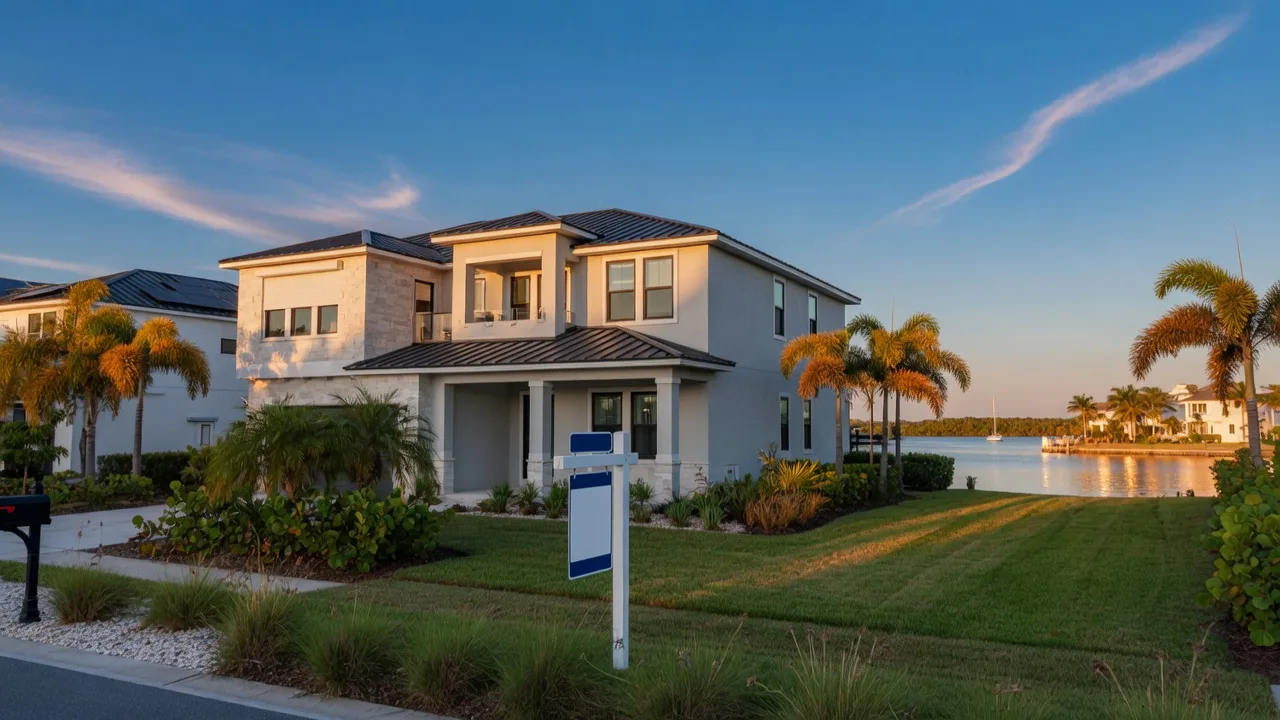
Home insurance has become one of the biggest factors in how Tampa Bay homes are bought and sold in 2026. Buyers are asking for insurance quotes before they make offers, sellers are fielding questions about roofs and flood zones, and a growing share of sales are closing in cash partly because financing plus insurance is more than many budgets will carry. As a husband-and-wife team with over 45 years in Tampa Bay and more than 1,000 homes sold, we talk about this every single day. Here's the honest picture of what the insurance market means for your next move.
September is the heart of hurricane season, so it's also the moment when these questions are loudest. If you're thinking about selling, buying, or simply keeping your home in the family, understanding how insurance is reshaping the market puts you far ahead of most people on either side of the table.
Why Insurance Is the Question Everyone Is Asking
Florida has the most expensive homeowners insurance in the nation. Statewide, average annual premiums sit near $3,800 to $3,900, according to recent industry reporting for 2026, and the Tampa Bay area runs higher than the state average in many coastal neighborhoods. It's a different world than most of the country: the U.S. average for a homeowners policy is roughly $2,100 to $2,400 a year. That gap is a line item that changes a buyer's monthly budget by hundreds of dollars, and it shows up in the price they're willing to offer.
There is good news buried in the numbers. After the legislative reforms of 2022 and 2023, more carriers have returned to the Florida market and competition is slowly coming back. Florida Realtors has reported that premiums flattened through 2025, rising only about 1.5% and even declining in some areas after quieter storm seasons and lower reinsurance costs. That's a meaningful change from the double-digit jumps homeowners feared a few years ago, though rates remain high by national standards.
What the Data Shows Across Tampa Bay
Insurance costs vary a lot by county and by how close you are to the water, so a single "Tampa Bay number" never tells the whole story. Here's the range we see in the areas we serve, based on recent local market reporting:
- Hillsborough County: single-family homes with wind coverage run roughly $3,400 to $4,800 a year.
- Coastal Pinellas: closer to the Gulf, policies commonly run $3,900 to $5,500 a year.
- Flood insurance: a separate policy that adds from a few hundred dollars up to $1,500 or more a year depending on your flood zone.
- Hurricane deductibles: typically 2% to 5% of your insured value, which matters a lot when you're planning a budget.
The takeaway isn't that coastal homes are unaffordable. It's that insurance is now a first-order consideration in pricing, financing, and the decision to make an offer at all. Homes with newer roofs, impact windows, and clean elevation documentation stand out, because they cost less to insure and carry less uncertainty.
How Buyers Are Changing the Way They Shop
The savviest buyers now treat insurance like a second inspection. Before they write an offer, they're checking FEMA flood maps, asking for elevation certificates, and calling an agent for a quote. In coastal and flood-prone pockets, some buyers simply walk away from high-risk properties, while others negotiate harder on price or ask the seller to help with the premium or a rate buy-down.
This is a big reason why a large share of Florida home sales now close in cash. A cash buyer sidesteps the lender's insurance requirements and moves faster, and that's reshaping how listings are won in competitive pockets of the market. It also means that a well-insured, storm-ready home is genuinely easier to sell, because it appeals to both the financing buyer and the cash buyer who wants certainty.
Buyers are also gravitating inland, where premiums are lower and flood risk is smaller. Communities in Pasco County, like Trinity and parts of New Port Richey, benefit from that search for value and peace of mind, while coastal favorites like Tarpon Springs still draw buyers who prize waterfront living and plan for the cost.
What This Means for Sellers
If you're selling, insurance is no longer a back-office detail. It's a marketing advantage you can build or a hidden objection you can hand to a buyer. Here's how to turn it in your favor:
- Get your documents ready before you list. A newer roof age, an impact-window installation date, an elevation certificate, and a clean insurance history answer the first three questions buyers ask. Hand them over up front and you remove doubt.
- Know your own premium and why. Be ready to talk about what your policy costs and the features that keep it reasonable. An informed seller reads as a credible one.
- Feature storm-readiness in your marketing. Impact windows, a fortified roof, and updated openings can save a buyer thousands in premiums every year. That's a concrete selling point, not a footnote.
- Price with insurance in mind. In a balanced market, buyers factor the monthly premium into what they can afford. Pricing against real, recent sales in your neighborhood is more important than ever.
For a deeper walk through getting your home market-ready, our hurricane season seller's prep guide covers roofs, openings, flood disclosures, and the exact questions buyers are asking in 2026.
What This Means for Buyers
For buyers, the message is simple: build insurance into your budget from day one, not after you fall in love with a house. Get a quote before you make an offer, check the flood zone, and know the hurricane deductible. A home that fits your budget on paper may not fit once the premium is added, and a home that seems expensive may actually be the better value if it costs far less to insure.
If you're relocating from out of state, this is one of the biggest differences from what you're used to, and it's exactly the kind of thing we walk out-of-state buyers through every week. We'll help you compare communities honestly, from the coastal charm of Tarpon Springs to the inland value of Odessa, so the numbers work for your whole budget.
The Bigger Market Picture
Insurance is one of several forces keeping Tampa Bay's market in a balanced, healthy place in 2026. Inventory has risen to roughly four to five months of supply, homes are taking a bit longer to sell than they did in the boom years, and mortgage rates have hovered in the upper 6s nationally this fall. None of that means Tampa Bay has stopped being a strong market. It means decisions are made on real numbers now, and the people who understand those numbers have the advantage.
What we love about this market is that it rewards knowledge. The buyer who understands insurance wins a better deal. The seller who understands what today's buyer values sells faster and for more. That's the kind of straight-talking guidance we've built our reputation on, and it's why clients keep telling us that who you hire truly matters.
The Bottom Line from Team Virgadamo
Home insurance has gone from a footnote to a deciding factor in Tampa Bay real estate. The good news is that it's a factor you can understand, prepare for, and turn to your advantage, whether you're buying, selling, or just planning ahead. We've lived and worked in this market for over 45 years and closed more than 1,000 homes, so we've seen how these forces play out street by street.
"Who You Hire Truly Matters." If you'd like a straight answer about what insurance means for your home or your next move, that's a free, zero-pressure conversation we'd be glad to have. We Live, Love & Sell Tampa Bay! and we're here to help you navigate it with confidence.
Want to know what your home or your next purchase really costs in this market?
Book a free, no-obligation consultation with Paul and Denise. We'll talk through insurance, pricing, and preparation honestly, and help you build a plan that fits today's market and your goals.
Explore the communities we serve: